
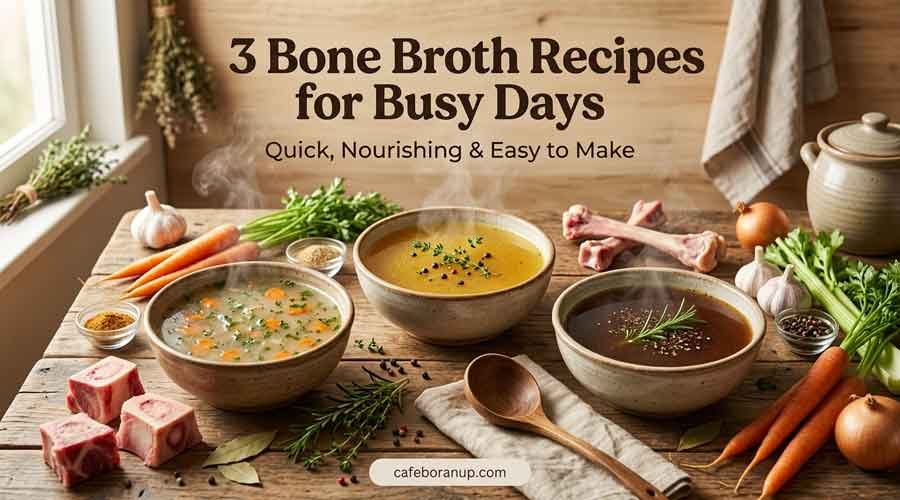
When you’re feeling tired after a long day, the last thing you want is a complicated meal. Maybe you get home late, or you simply want a comforting bowl of something warm and healthy. The good news? You don’t need hours in the kitchen or a long list of ingredients to make something delicious. Bone broth is an old favorite that’s quick, easy, and incredibly good for you. In this article, you’ll discover three simple bone broth recipes. They’re made for real life—fast, fuss-free, and full of flavor. Let’s make dinner feel effortless again.

Why These Bone Broth Recipes Make Life Easy
You want meals that fit your schedule and your budget. These bone broth recipes bring comfort and nutrition without any stress.
- Ready with simple steps anyone can follow
No tricky techniques or special skills needed. Each recipe starts with basics like bones, water, and vegetables. You simply chop, add to the pot, and let it simmer. Even if you’ve never made broth before, you’ll find these recipes clear and easy.
- Use few ingredients—nothing fancy
Most ingredients are common kitchen staples: carrots, onions, celery, garlic. Bones can come from leftovers or store-bought packs. No need for rare herbs or expensive spices. If you’re missing something, you can easily swap or skip it.
- Fast prep (just minutes to start, simmer while you relax)
The hardest part is waiting for the broth to simmer. Actual hands-on time is less than 15 minutes for most recipes. You can do other things while it cooks—watch TV, read, or get chores done.
- Affordable—uses basic kitchen staples
Bones are often cheap or free if you save leftovers. Vegetables and vinegar cost very little. Compared to store-bought broths, homemade is much cheaper per serving and has no hidden additives.
- Flexible: Make a little or a lot, for meals or snacks
You can double or halve the recipes easily. Bone broth keeps well, so you can make extra and freeze for later. Sip a mug for a snack, or use it as a base for other meals.
- Perfect for meal prep or last-minute dinners
Cook once, enjoy many times. Bone broth is a great meal-prep staple because it reheats quickly and tastes just as good later. It’s also handy for sudden hunger or surprise guests.
Classic Chicken Bone Broth: The Everyday Hero
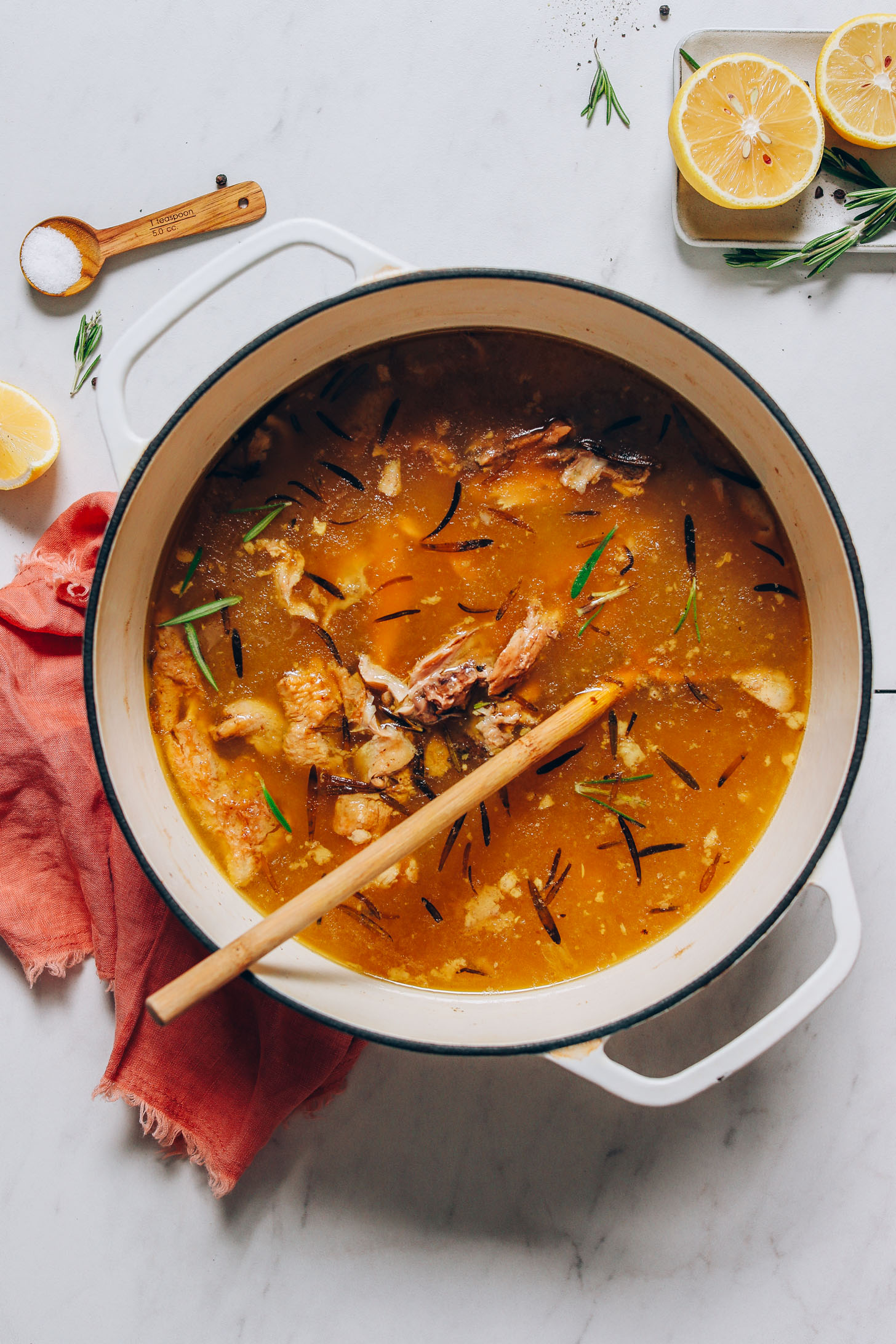
A good chicken bone broth is a kitchen staple. It’s light, nourishing, and easy to customize. Whether you sip it on its own or use it as a soup base, this recipe delivers pure comfort.
🍫 Ingredients:
- 2 lbs chicken bones (from a whole chicken or drumsticks)
- 2 medium carrots, chopped
- 2 stalks celery, chopped
- 1 large onion, quartered
- 3 garlic cloves, smashed
- 2 bay leaves
- 1 tsp whole peppercorns
- 1 tbsp apple cider vinegar
- 10 cups water
- 1 tsp salt (add more to taste)
🥣 Steps:
- Place chicken bones in a large pot.
- Add carrots, celery, onion, garlic, bay leaves, and peppercorns.
- Pour in apple cider vinegar and water.
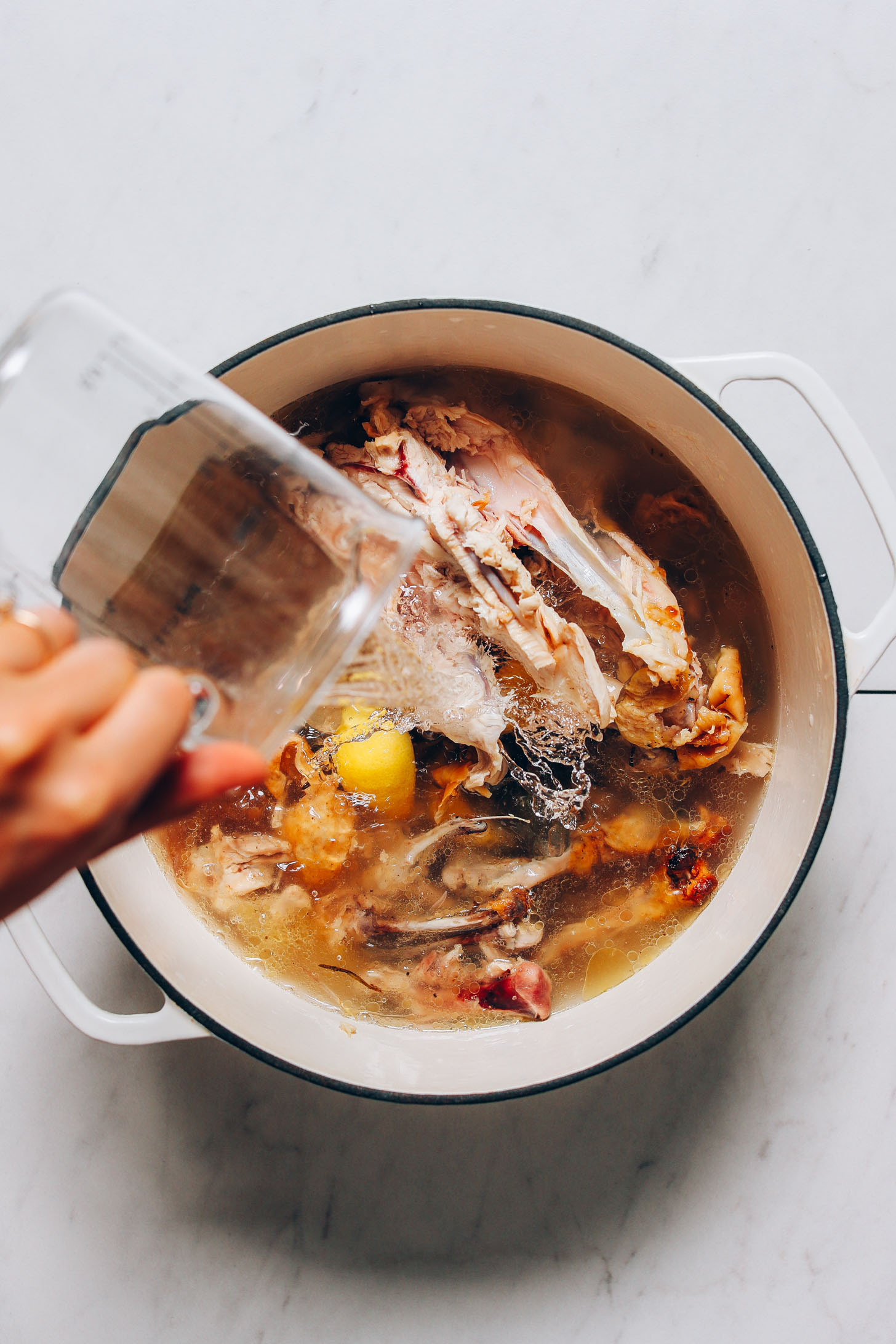
- Bring to a boil, then reduce to a gentle simmer. Skim any foam.
- Cover and simmer for 2.5 to 3 hours.
- Strain broth through a fine sieve into a clean container.
- Season with salt. Cool before storing.
Why you’ll love it: It’s the ultimate base for any soup or rice dish.
More detail:
Chicken bone broth is often the first broth people try. The flavor is mild, so it pairs well with almost any cuisine—Western, Asian, or Mediterranean. If you have leftover cooked chicken bones, don’t throw them out. They work just as well as raw bones.
You can also add herbs like parsley or thyme for extra aroma.
Practical example:
If you cook a whole roast chicken on Sunday, save the bones and vegetable scraps. Throw them in the pot Monday for fresh broth. This turns leftovers into a new meal, saving money and reducing waste.
Many beginners miss that you can add chicken feet or wings to boost collagen. This makes the broth thicker and more nutritious. If you see it gel in the fridge, that’s a good sign!
Common mistake:
People sometimes boil the broth too hard. This makes it cloudy and can dull the flavor. Always keep the heat low for a clear, tasty broth.
Rich Beef Bone Broth: Deep And Satisfying
If you crave something more robust, beef bone broth is rich, full of body, and satisfying on its own or in hearty recipes. The slow simmer brings out a deep umami flavor.
🍫 Ingredients:
- 3 lbs beef bones (marrow or knuckle bones)
- 2 medium carrots, roughly chopped
- 2 stalks celery
- 1 large onion
- 2 tbsp tomato paste
- 1 head garlic, halved
- 2 bay leaves
- 1 tsp whole black peppercorns
- 2 tbsp apple cider vinegar
- 12 cups water
- 1 tsp salt
🥣 Steps:
- Preheat oven to 425°F. Spread beef bones on a baking sheet and roast for 40 minutes.
- Place roasted bones in a large pot. Add carrots, celery, onion, and garlic.
- Stir in tomato paste, bay leaves, peppercorns, and vinegar.
- Pour in water. Bring to a boil, then reduce heat to a low simmer.
- Skim off any foam. Cover and simmer 4 to 6 hours.
- Strain through a fine sieve. Discard solids.
- Season with salt. Let cool before storing.
Why you’ll love it: It’s a warming, protein-rich snack or soup starter.
Expanded explanation:
Beef bone broth has a richer flavor and darker color than chicken broth. This is because beef bones have more marrow and connective tissue. Roasting the bones before simmering is key—it caramelizes the meat and fat, giving the broth a deep, almost smoky taste.
Example:
If you want a broth that stands up to strong flavors, use beef bone broth for French onion soup or chili. It also makes a great base for stews or gravy.
Many people don’t realize that the type of beef bone matters. Marrow bones give creamy texture, while knuckle bones provide more gelatin. Mixing both gives the best results.
If you can’t find marrow bones, ask your butcher or look in the freezer section. Sometimes, stores label them as “soup bones. ”
Extra:
If you want a broth with even more richness, add a small piece of beef shank or oxtail. This adds meat and flavor.
Don’t skip roasting the bones. Raw bones make the broth bland and pale. Roasting gives a much better taste.
Simple Asian-inspired Bone Broth: Fast And Flavorful
This lighter, Asian-style bone broth is bright with ginger and scallion. It’s ready faster and makes a great base for noodle soups, dumplings, or sipping cups.
🍫 Ingredients:
- 2 lbs chicken or pork bones
- 2-inch piece ginger, sliced
- 4 scallions (green onions), cut in half
- 2 garlic cloves, smashed
- 8 cups water
- 1 tbsp rice vinegar (or apple cider vinegar)
- 1 tsp soy sauce
- 1 tsp salt
🥣 Steps:
- Place bones, ginger, scallions, and garlic in a large pot.
- Add vinegar, soy sauce, and water.
- Bring to a boil, then reduce heat to a gentle simmer.
- Skim off foam. Simmer 1.5 to 2 hours.
- Strain broth. Taste and add more salt if needed.
Why you’ll love it: It’s quick, light, and full of bright flavor.
Expanded details:
This broth is great if you want a lighter, fresher taste. Ginger gives warmth and helps digestion. Scallions add a gentle onion flavor without overpowering the broth. Asian-style broths are often used as the base for ramen, pho, or hot pot.
Example:
If you make dumplings or wontons, cook them in this broth for extra flavor. Or add cooked noodles, tofu, and vegetables for a fast soup.
You can use leftover pork bones from roast pork or ribs. Asian broths often use both chicken and pork for a more complex taste.
Tip for beginners:
If you don’t have rice vinegar, apple cider vinegar works just as well. Soy sauce gives a little salt and umami, but you can skip it if you want a clear broth.
Adding a dried mushroom boosts flavor and nutrition. Mushrooms add glutamates (natural umami) that make the broth more satisfying.
Mistakes To Avoid When Making Bone Broth
Bone broth is easy, but a few missteps can affect both flavor and nutrition. Watch out for these common mistakes:
- Don’t use too little water—bones should be fully covered
If bones stick out above the water, the broth won’t extract all the goodness. Always add enough water to cover everything by at least an inch.
- Avoid boiling the broth hard; gentle simmering extracts more collagen
High heat can break down collagen too quickly and make broth cloudy. Gentle simmering keeps flavors clear and lets nutrients slowly release.
- Don’t forget to skim foam for a clear broth
Foam is mostly protein and fat that rises early in cooking. Skimming makes the broth look and taste better. Use a spoon or small strainer.
- Avoid adding salt at the start; add near the end so it doesn’t get too salty
Broth reduces as it simmers. If you salt early, it can become too salty as water evaporates. Always taste and adjust salt at the end.
- Don’t skip vinegar—it helps pull out minerals from the bones
Vinegar isn’t just for flavor—it helps dissolve calcium and other minerals, making the broth more nutritious.
- Don’t rush the simmer; good broth takes time for full flavor
Simmering for hours draws out gelatin, collagen, and flavor. If you stop too soon, you’ll miss the best parts.
Don’t use bones that are too lean or small, like just breast bones. Add joints, wings, necks, or feet for more collagen and a richer broth.
Another insight:
Many people add too many vegetables or herbs. Start simple, then adjust. Overloading can mask the bone flavor.
How To Store, Reheat, And Reuse Your Bone Broth
Bone broth is perfect for meal prep, but storing it right keeps it safe and delicious.
- Fridge: Store cooled broth in airtight containers for up to 5 days.
Glass jars or plastic containers work well. Make sure broth is cooled to room temperature before sealing.
- Freezer: Pour into freezer-safe bags or ice cube trays for up to 3 months.
Ice cube trays make it easy to add a little broth to any dish. Label bags with the date so you remember how old they are.
- Reheating: Warm on the stove over medium heat. Stir to recombine any fat.
Microwaving works, but stove reheating preserves flavor better. If broth separates, just stir or shake.
- Reuse ideas: Use as a base for soups, risotto, sauces, or to cook grains like rice or quinoa.
Broth brings flavor to simple dishes. Replace water with broth when cooking rice for a richer taste. Use in mashed potatoes, pasta sauces, or even oatmeal for savory breakfasts.
Tip: If you see a layer of fat on top, don’t worry! It helps seal in flavor and acts as a natural preservative.
If you prefer less fat, you can skim it off when cold and use it for cooking vegetables.
Extra practical tip:
Freeze broth in different amounts—small cubes for quick flavor, larger containers for soup. This makes meal planning easier.
Don’t forget to label containers. Broth can look similar to other stocks. Add the date and type (chicken, beef, etc. ) So you can use the oldest first.
Quick Tips For Faster, Easier Bone Broth
- Use pre-cut soup bones from the grocery store for less prep.
Most stores sell packs labeled “soup bones. ” These are ready to use and save time.
- No time to chop? Toss in whole vegetables and remove before serving.
Large chunks are easy to fish out after cooking, and you don’t need to peel for broth.
- Use a slow cooker or Instant Pot for set-it-and-forget-it cooking.
Slow cookers let you simmer overnight or while you’re at work. Instant Pot can do bone broth in 1–2 hours with similar results.
- Substitute apple cider vinegar with lemon juice if needed.
Both acids help extract minerals. Lemon gives a fresh, citrusy note.
- Don’t throw away rotisserie chicken bones—they make great broth.
Rotisserie bones add extra flavor from their seasoning and roasting.
- Freeze leftover broth in cubes for quick flavor boosts in other dishes.
Drop a cube into stir-fry, sauces, or even boiling water for pasta.
Extra fast tip:
Save vegetable scraps (carrot tops, onion skins, celery leaves) in the freezer and add to the pot for more flavor.
Don’t worry about perfect measurements. Bone broth is very forgiving—add more or less water, vegetables, or vinegar as you like.
Comparing The Three Bone Broth Recipes
You might wonder which broth fits your needs best. Here’s a quick comparison to help you decide:
| Recipe | Main Protein | Cooking Time | Flavor Profile | Best Uses |
|---|---|---|---|---|
| Classic Chicken | Chicken bones | 2.5–3 hours | Light, savory | Soups, sipping, rice |
| Rich Beef | Beef bones | 4–6 hours | Deep, rich | Hearty soups, stews |
| Asian-Inspired | Chicken or pork | 1.5–2 hours | Light, ginger, umami | Noodles, dumplings |
Expanded comparison:
Chicken broth is best if you want something mild and versatile. Beef broth is richer and works well for strong-flavored dishes. Asian-style broth is quicker, lighter, and great for noodle bowls or dumplings.
If you’re not sure which to make, try a half batch of two recipes and taste both. You might discover a new favorite!
Asian-style broth is great for breakfast. Many cultures sip broth in the morning for energy and warmth.

Nutritional Benefits Of Bone Broth
Bone broth is more than just tasty—it’s packed with benefits that make it a smart choice for your health.
| Benefit | How It Helps |
|---|---|
| Collagen | Supports healthy joints and skin |
| Minerals (calcium, magnesium) | Builds strong bones |
| Gelatin | Good for gut and digestion |
| Amino acids | Help muscle repair and immune health |
| Low calories | Great for light meals and snacks |
Interesting insight: Adding a little vinegar not only draws out more minerals but also gives the broth a subtle tang that balances the meaty taste.
Another tip: The “wiggle” you see when cold means your broth is packed with collagen—a sign you did it right.
Expanded explanation:
Bone broth is a natural source of nutrients that many store-bought broths lack. Collagen and gelatin help support the lining of your gut. This is why bone broth is often recommended for people with digestive issues.
Example:
If you feel under the weather, sipping bone broth can help hydrate and provide easy-to-digest protein.
Bone broth is a great way to get minerals without dairy. If you’re lactose intolerant, broth provides calcium and magnesium in a gentle form.
Broth is hydrating and low-calorie, so it works well for fasting or detox days.
Frequently Asked Questions
How Do I Make Bone Broth If I Don’t Have A Big Pot?
Use a slow cooker or even a smaller saucepan. Just cut the recipe in half and simmer longer. The slow cooker keeps the temperature low and steady, which is perfect for bone broth.
If you use a small pot, check water levels often and add more as needed.
Can I Reuse The Bones For A Second Batch?
Yes, you can use the same bones for a second, lighter broth. Add fresh water and simmer again, but the second batch will be less rich. Some people add a few more veggies or a splash of vinegar to bring out more flavor.
Insight:
If you want to boost the second batch, add a handful of fresh bones or some extra herbs.
Is Bone Broth Safe For Kids?
Bone broth is usually safe for kids and can be nutritious. Just use less salt and strain carefully to remove any small bone fragments. Always check with your doctor if your child has special dietary needs.
Tip:
Serve bone broth plain or mix into rice, noodles, or mashed potatoes for easy meals.
What If My Broth Doesn’t Gel When Cold?
Don’t worry! Your broth is still full of nutrition. Sometimes, less collagen is released if the bones are small or the simmer time is short. Try adding more joint bones (like chicken feet or wings) next time for extra gelatin.
Gel doesn’t affect taste. You can still use the broth for all recipes.
Where Can I Learn More About The Science Behind Bone Broth?
For a deeper look at the nutrition and history of bone broth, you can read the article on Wikipedia.
Ready To Try These Bone Broth Recipes?
Now you have three easy, delicious bone broth recipes you can make any time. They’re perfect for busy days, lazy nights, or when you just want something comforting and healthy. Pin your favorite recipe for later, and share your broth creations with friends and family.
Which one will you try first—the classic chicken, rich beef, or the Asian-inspired broth? Let us know!