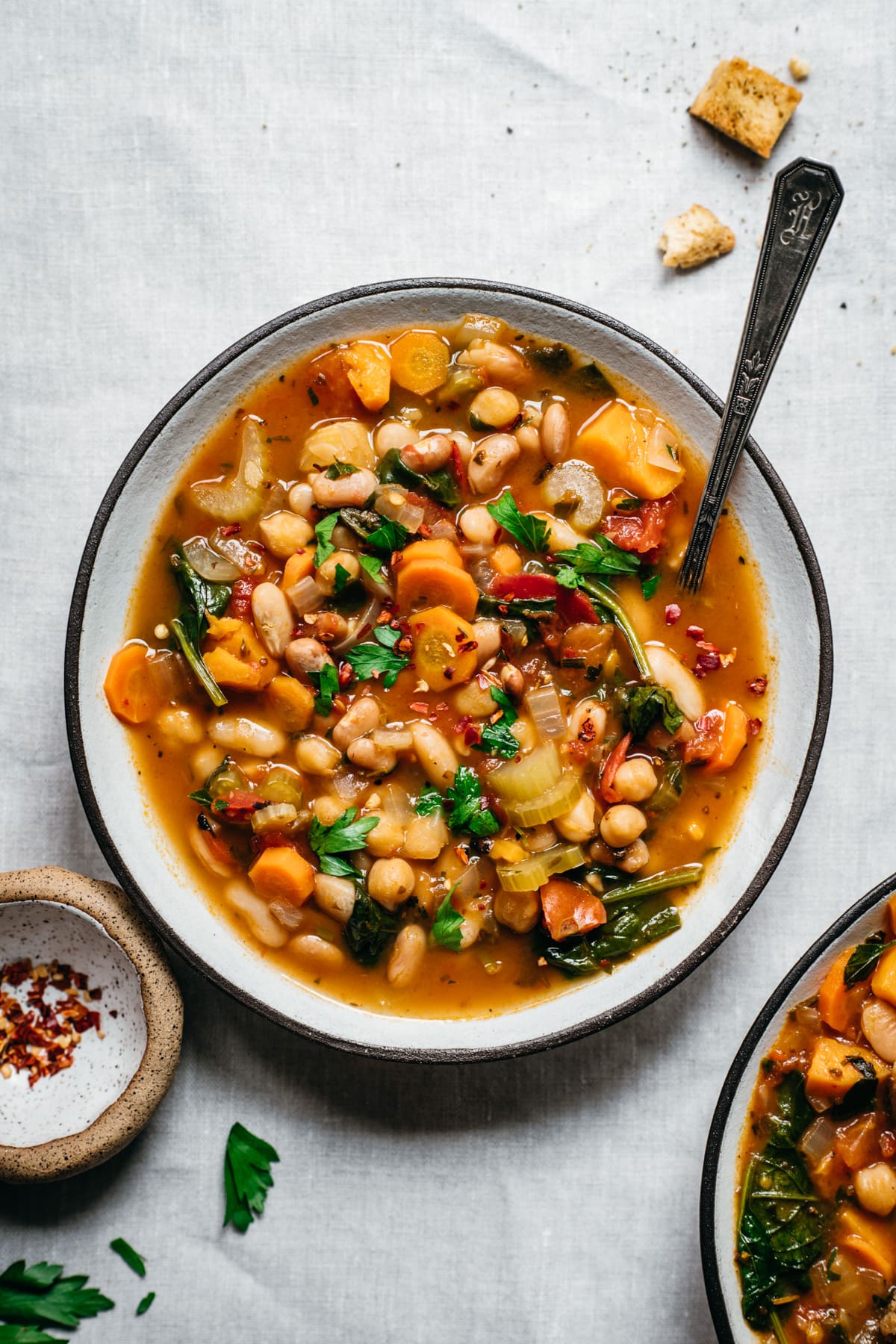

After a long day, nothing feels better than a warm bowl of comfort food. But when you’re busy, tired, or just not in the mood to cook, it’s easy to reach for unhealthy options. The truth is, you can make your own healthy vegetable broth in minutes—no chef skills needed. These simple recipes use just a few ingredients and save you money, time, and effort. If you want to cook smarter, eat healthier, or just need a cozy base for soups and stews, these are the vegetable broth recipes you’ll come back to all year.
Homemade broth is not just a kitchen basic; it’s a small act of self-care that can make you feel good, inside and out. Whether you’re new to cooking or looking for ways to add flavor without extra calories, learning to make broth is a skill that pays off every week.
It’s a simple upgrade for everyday meals, and it’s also a smart way to use vegetables before they go bad. Even if your fridge is nearly empty, you can often put together a tasty broth with what you have on hand.
Think of broth as your kitchen’s secret weapon—one that brings out the best in every dish, and gives you a healthy alternative to packaged stocks loaded with salt and preservatives.
Let’s dive in and discover how making your own vegetable broth can change the way you cook and eat.
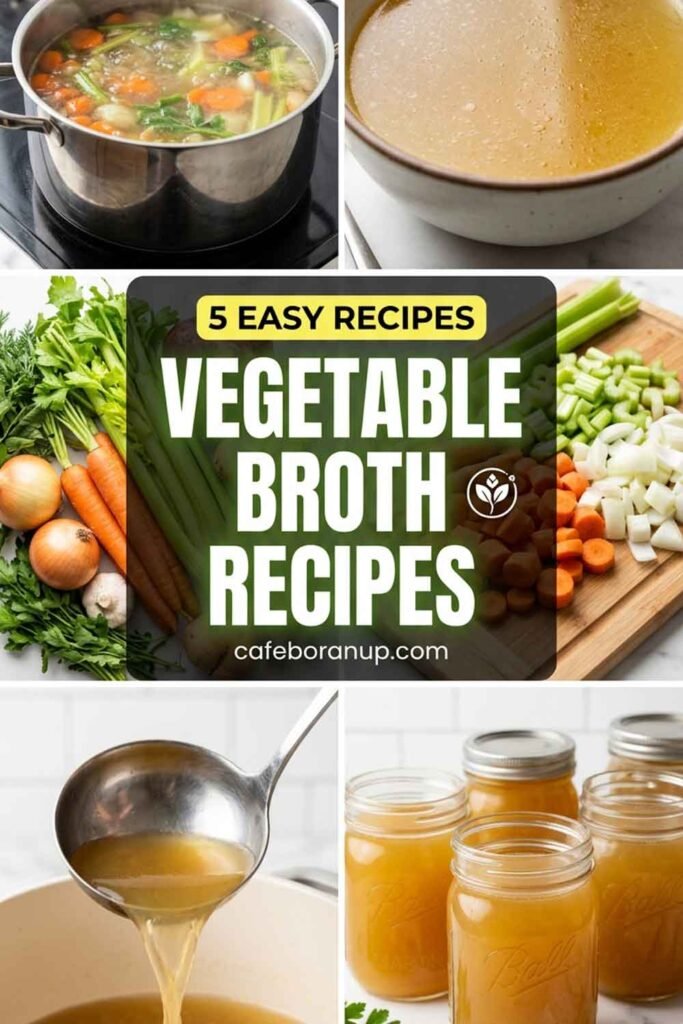
Why These Broths Are Life-savers
Home-cooked broth has real advantages. Here’s why you’ll love these recipes:
- Fast: Each broth takes less than an hour (most of it is hands-off). You don’t have to spend all afternoon in the kitchen. While the broth simmers, you can tidy up, prep other ingredients, or just relax.
- Simple: Basic techniques—no fancy equipment. If you have a pot and a strainer, you’re set. No need for blenders, pressure cookers, or special gadgets. This makes cleanup easy, too.
- Budget-Friendly: Uses leftover veggies and pantry staples. You can use the ends of carrots, celery, and onions that might otherwise go in the trash. Broth turns “waste” into flavor and nutrition.
- Few Ingredients: Most recipes use 6–8 items. You don’t need to shop for rare or expensive vegetables. In fact, the best broths are made from simple, everyday foods.
- Versatile: Use as a soup base, for grains, or sip on its own. Pour over rice, cook your lentils in it, or just fill a mug and drink.
- Customizable: Swap in what you have at home. No carrots? Try parsnips. No parsley? Toss in a little dill or basil. The recipes are flexible.
Another benefit: If you have food sensitivities or allergies, making your own broth means you control every ingredient. No hidden gluten, dairy, or mystery “natural flavors.”
—
Classic Vegetable Broth (perfect For Any Soup)
This is the go-to vegetable broth that works for nearly any dish. It’s clear, flavorful, and brings out the best in simple ingredients. Great for soup, risotto, or sipping when you’re under the weather.
Prep + Cook Time: 45 minutes
Serves: 6 cups
🍫 Ingredients:
- 2 tablespoons olive oil
- 2 large carrots, chopped
- 2 celery stalks, chopped
- 1 large onion, quartered
- 4 garlic cloves, smashed
- 1 bay leaf
- 1 teaspoon black peppercorns
- 8 cups water
- 1 teaspoon salt (optional)
- 1 handful parsley stems (or leaves)
🥣 Steps:
- Heat olive oil in a large pot over medium heat. Add carrots, celery, and onion. Sauté for 5 minutes. This step draws out the sweetness and aroma, making your broth taste better.
- Add garlic, bay leaf, peppercorns, and parsley. Stir for 2 minutes. The garlic and herbs release their oils, adding subtle complexity.
- Pour in water and add salt. Bring to a boil. If you want a stronger flavor, use less water (about 6 cups) for a more concentrated broth.
- Reduce heat to a simmer. Cover loosely and cook for 35 minutes. Simmering gently (not boiling hard) keeps flavors clear, not muddy.
- Strain broth through a fine sieve into a large bowl. If you want a very clear broth, you can also strain through a cheesecloth or coffee filter.
- Discard solids. Taste and add more salt if needed.
Why you’ll love it:
Classic, clean taste—perfect for all your soup and stew needs. This broth is also a healthy base for cooking grains, making simple sauces, or as a nourishing drink when you’re feeling unwell.
Another tip: Don’t toss the strained vegetables right away. If you want, blend them into a puree and add them to stews or casseroles for extra fiber.
—
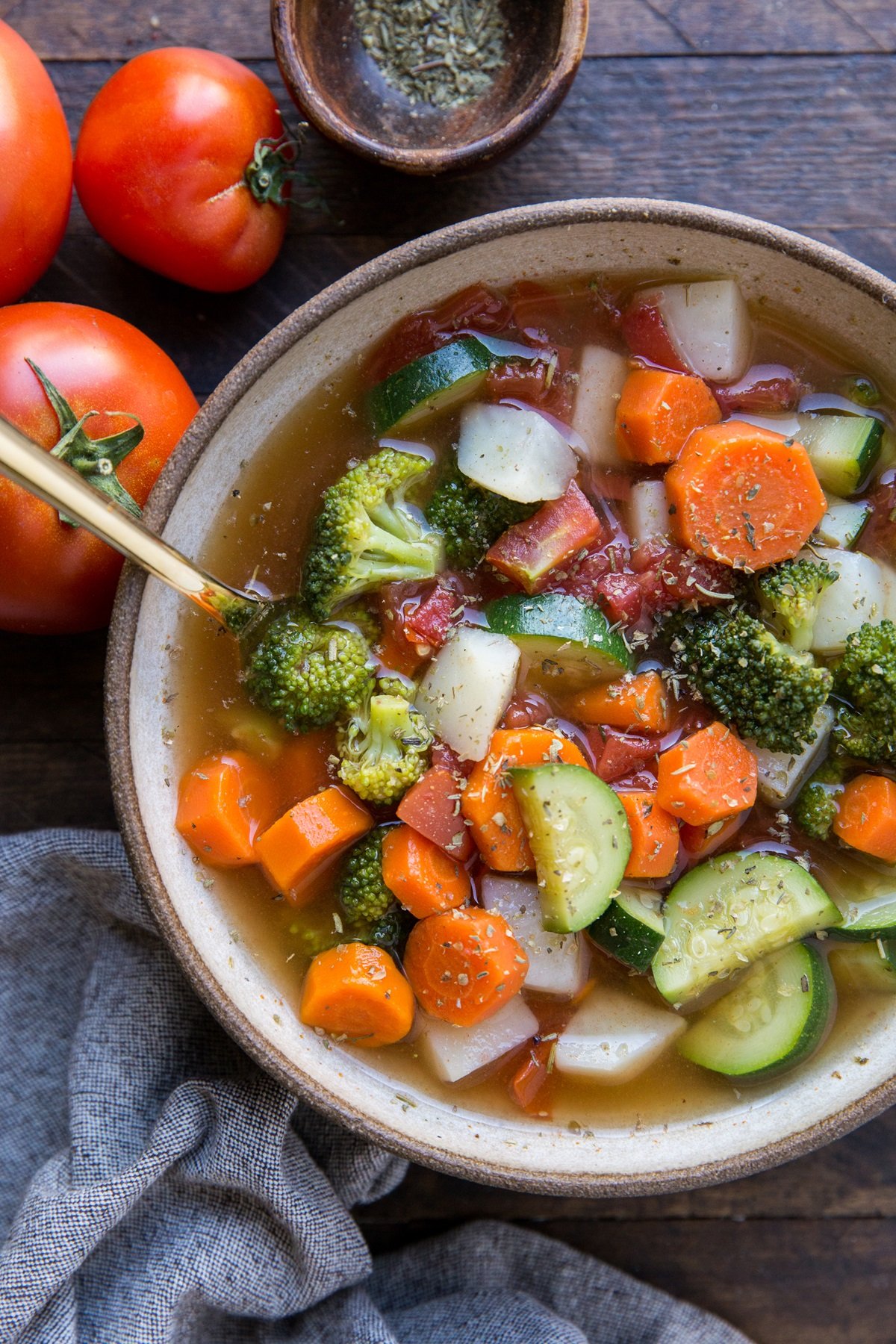
Immune-boosting Golden Broth (turmeric & Ginger)
This golden vegetable broth is packed with anti-inflammatory spices. Turmeric and ginger give it a bright color and warming flavor. Sip it when you feel a cold coming on, or use it as a base for healing soups.
Prep + Cook Time: 50 minutes
Serves: 7 cups
🍫 Ingredients:
- 1 tablespoon coconut or olive oil
- 2 carrots, sliced
- 1 leek (white and light green parts), sliced
- 1 small sweet potato, diced
- 1 thumb-sized piece of fresh ginger, sliced
- 2 teaspoons ground turmeric (or 1-inch fresh root, sliced)
- 1 teaspoon black peppercorns
- 7 cups water
- 1 teaspoon salt (optional)
- 1 handful cilantro stems (or parsley stems)
- 2 garlic cloves, smashed
🥣 Steps:
- Heat oil in a pot over medium heat. Add carrots, leek, and sweet potato. Cook 5 minutes. The sweet potato gives your broth body and a subtle sweetness, balancing the spices.
- Add ginger, turmeric, garlic, and peppercorns. Stir for 1–2 minutes. Heating the spices in oil helps release their beneficial compounds, especially the curcumin in turmeric.
- Pour in water. Add cilantro stems and salt. Cilantro stems add fragrance without overpowering the broth.
- Bring to a boil, then simmer uncovered for 40 minutes. Simmering with the lid off helps the flavors concentrate and keeps the broth golden.
- Strain through a fine sieve. Press veggies gently to extract liquid. You can also use a potato masher to get more out of the veggies.
- Skim off any foam or excess oil from the top.
Why you’ll love it:
Bright, spicy, and deeply warming—perfect for sick days or chilly evenings. Turmeric and ginger are both known for their anti-inflammatory and soothing effects, making this broth ideal when you need a health boost.
Another tip: This broth also works as a flavorful liquid for cooking rice or noodles. It adds nutrition and color to otherwise plain grains.
—
Mushroom & Herb Vegetable Broth (rich & Savory)
For a more savory, earthy flavor, try this mushroom vegetable broth. Mushrooms add umami richness, making this broth a great vegetarian swap for beef broth in recipes.
Prep + Cook Time: 55 minutes
Serves: 8 cups
🍫 Ingredients:
- 1 tablespoon olive oil
- 2 cups mushrooms (button, cremini, or a mix), sliced
- 2 carrots, chopped
- 2 celery stalks, chopped
- 1 onion, chopped
- 3 garlic cloves, smashed
- 2 sprigs fresh thyme (or 1 teaspoon dried)
- 1 bay leaf
- 8 cups water
- 1 teaspoon salt (optional)
- 1 teaspoon black peppercorns
🥣 Steps:
- Heat oil in a large pot. Add mushrooms and cook for 5–6 minutes until browned. Browning mushrooms brings out their natural umami, a savory taste that makes this broth stand out.
- Add carrots, celery, onion, and garlic. Sauté 5 more minutes. The extra step of sautéing before adding water makes the broth richer.
- Stir in thyme, bay leaf, peppercorns, and salt. Herbs like thyme add layers of aroma and a subtle earthy note.
- Pour in water. Bring to a boil, then simmer for 40 minutes, uncovered. If you have dried mushrooms, add a small handful for an even deeper taste.
- Strain through a sieve, pressing vegetables to extract flavor.
Why you’ll love it:
Full-bodied, meaty taste—delicious for ramen, gravy, or sipping hot. This broth is perfect for recipes that usually call for a dark stock, like French onion soup or vegetarian stews.
Another tip: For a unique twist, add a teaspoon of soy sauce or a few drops of liquid smoke to your pot. This adds an extra “meaty” dimension, making the broth even more satisfying.
—
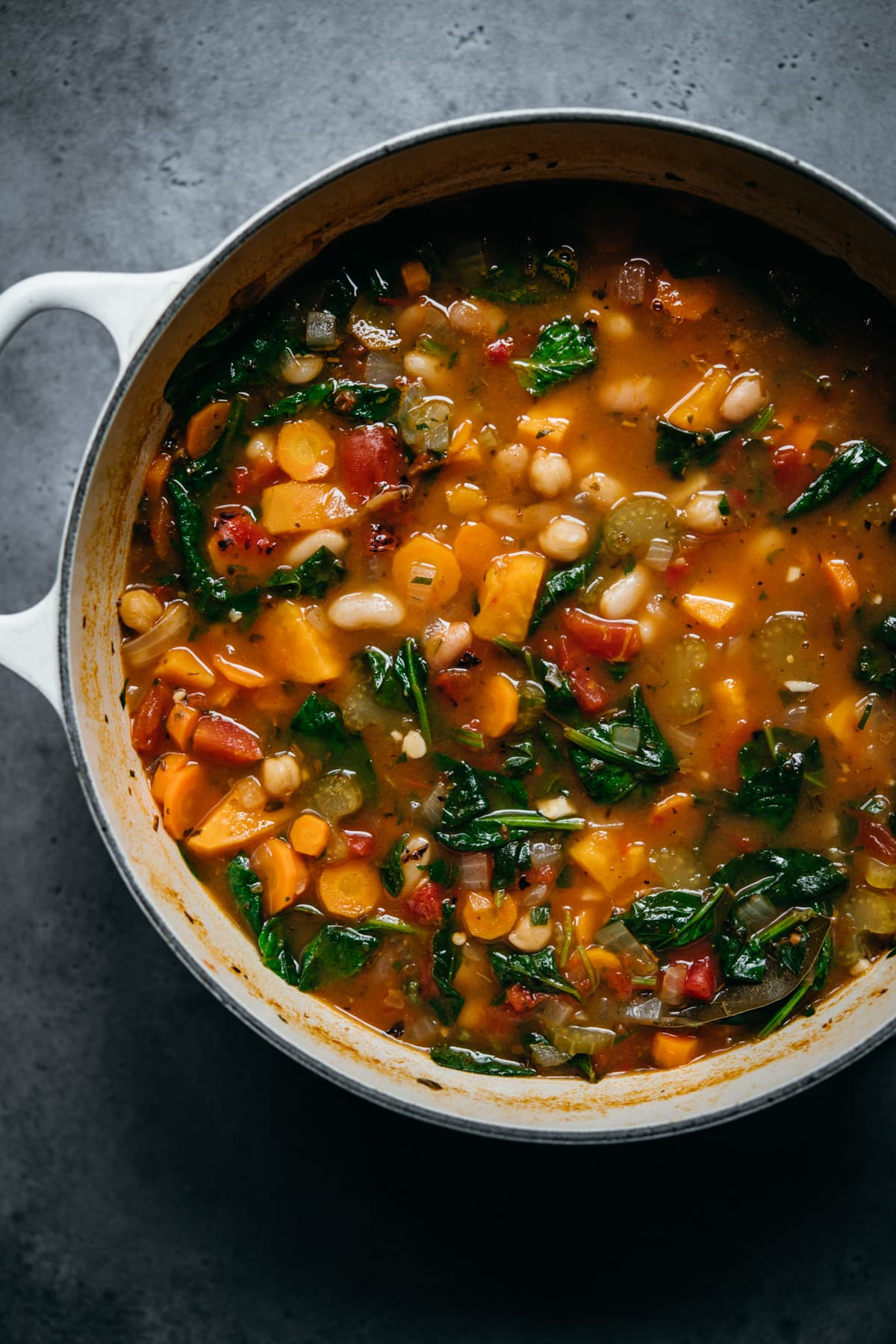
Common Mistakes To Avoid With Vegetable Broth
Even simple recipes can go wrong. Watch out for these pitfalls:
- Don’t boil broth too hard—gentle simmering extracts flavor without bitterness. Boiling causes vegetables to break down too quickly and can make the broth taste harsh or muddy. You want small bubbles, not a rolling boil.
- Avoid using bitter vegetables like too much kale, broccoli, or cabbage (unless you want bitterness). A small amount is fine, but too much overwhelms the broth. Bitter flavors are strong and hard to fix once they’re in the pot.
- Don’t skip straining—leftover veggie bits make broth cloudy. A clean broth looks and tastes better, especially if you’re using it in clear soups.
- Avoid salting heavily at first—reduce and taste before adding more. Broth can become saltier as it reduces, so it’s best to add a little and adjust at the end.
- Don’t use old, spoiled, or moldy veggies—freshness matters for taste and safety. If you wouldn’t eat it, don’t put it in your broth. Off flavors can’t be masked by herbs or spices.
- Avoid overcrowding the pot—give veggies room to release flavor. If the pot is too full, the vegetables steam instead of simmer, and you don’t get as much taste.
Another common mistake: Using too much water for a small amount of vegetables. The broth will taste weak and watery. Stick to about 1 part vegetables to 2–3 parts water for good flavor.
—
Storing And Reusing Vegetable Broth
Homemade broth keeps well if stored right. Here’s how to make it last:
- Fridge: Store cooled broth in a sealed container for up to 5 days. Always cool broth to room temperature before refrigerating. If you put hot broth in the fridge, it can raise the temperature and spoil other foods.
- Freezer: Portion into jars or ice cube trays. Freeze up to 3 months. Broth cubes are handy—just pop out what you need for sauces or cooking grains.
- Reheating: Gently heat on the stove or in the microwave—don’t boil, or flavors may dull. If a layer of fat forms on top after chilling, you can skim it off for a lighter broth.
- Reusing Ideas:
- Cook grains like rice or quinoa in broth for more flavor. This makes plain side dishes special.
- Use as a base for sauces, gravies, or stews. Even a splash in a pan can deglaze and add taste to sautéed veggies.
- Sip hot with a squeeze of lemon and a pinch of salt. This is a healthy alternative to tea or coffee.
- Add to mashed potatoes, polenta, or couscous instead of water for richer taste.
- Freeze in small containers to add a burst of flavor to quick stir-fries or reheated leftovers.
Another tip: If you don’t have ice cube trays, pour the broth into zip-top freezer bags and lay them flat. They freeze quickly and stack well, saving space.
—
Quick Tips For Better Broth Every Time
- Save scraps: Freeze carrot peels, celery ends, onion skins for your next batch. Just rinse and keep in a freezer bag until ready to use. This reduces waste and makes broth even cheaper.
- Don’t peel: Use unpeeled veggies (well-washed) for extra nutrients and flavor. The skins of onions and carrots add color and vitamins.
- Substitutes: No mushrooms? Try dried seaweed for umami. No fresh herbs? Use dried (half the amount). Dried herbs are stronger, so use less.
- Spice swap: Add star anise, cloves, or a pinch of smoked paprika for different flavor notes. This keeps your broths interesting and new.
- Short on time? Simmer just 25–30 minutes—still tasty, just lighter. You’ll get a more delicate flavor that’s great for sipping or cooking grains.
- Double batch: Make more and freeze so you always have broth ready. This saves time on busy nights and means you always have a healthy base for meals.
- Strain twice for extra-clear broth. Use a fine mesh strainer, then pass through a coffee filter if you want a crystal-clear result for special dishes.
- Let broth cool uncovered at room temperature for 20–30 minutes before refrigerating. This helps prevent condensation and keeps flavors fresh.
Another tip: If you want a richer texture, blend a cup of the cooked vegetables with a little broth and stir it back in for a thicker, heartier soup base.
—
Frequently Asked Questions
How Do I Make Vegetable Broth Taste Richer?
Brown your veggies first—especially onions and mushrooms. Roasting or sautéing adds depth and caramelized flavor. For more umami, add dried mushrooms, tomato paste, or a splash of soy sauce while simmering. These tricks create a flavor foundation that makes even simple broths taste gourmet.
You can also add a Parmesan cheese rind (if not vegan) during simmering for a subtle, savory note. Just remove it before straining.
Can I Use Vegetable Scraps For Broth?
Yes. Clean scraps like onion ends, celery leaves, carrot tops, and parsley stems are perfect. Avoid spoiled, moldy, or bitter scraps (like potato peels or too many cruciferous veggies). Scraps should smell fresh, not rotten.
A little tip: Collect scraps in a freezer bag over a week or two, then make broth when the bag is full. This makes broth-making almost free and helps reduce food waste.
Is Homemade Broth Healthier Than Store-bought?
Homemade broth is lower in sodium and free from preservatives. You control the ingredients—so it’s usually fresher, cleaner, and more nutritious. Store-bought broths often contain additives, artificial flavors, and lots of salt. For more info, see Healthline.
With homemade broth, you can also avoid allergens and adjust flavors exactly as you like.
What Vegetables Should I Avoid In Broth?
Skip strong or bitter veggies like broccoli, Brussels sprouts, cabbage, artichokes, and turnips. Potatoes can make broth cloudy. Use sweet or mild vegetables for the best flavor. Beets will turn your broth red, which may not work for all recipes.
Also, avoid adding too many leafy greens—they can get slimy and overpower the taste.
Can I Make Broth In A Slow Cooker Or Instant Pot?
Yes! In a slow cooker, cook on low for 6–8 hours. In an Instant Pot, use the “Soup” setting for 30 minutes. Let pressure release naturally for best results. These methods are hands-off and give you deep flavor with less effort.
If you use a pressure cooker, you can add tougher vegetable scraps because the pressure extracts more nutrients and taste.
—
Warm, homemade vegetable broth is more than just a base—it’s an easy way to make every meal taste better. Try these recipes, pin your favorite, and discover how simple cooking can change your routine. With a little practice, broth-making will become a habit you enjoy and trust. You’ll be amazed at how good fresh broth tastes compared to anything in a box or can.
Which broth will you try first? Share your tips or questions below!