
Struggling to add flavor to your meals when you’re busy, tired, or just plain hungry? Many of us reach for boring, bland food because it’s quick. But what if you could have a jar of bright, tangy pickled banana peppers ready in your fridge—made in minutes, with ingredients you probably have on hand? These peppers add a punch to sandwiches, salads, pizzas, and more. You don’t need fancy skills or special tools. With just a few steps, you’ll always have a burst of flavor waiting for you. Let’s explore two simple pickled banana pepper recipes that anyone can make—even if you’re short on time or energy.
Pickling is an old method, but it’s still popular for a reason. It’s one of the easiest ways to make ordinary vegetables exciting. Banana peppers are especially good for pickling because they stay crisp, soak up flavors fast, and look beautiful in a jar.
Whether you’re new to pickling or just want something quick, these recipes work every time. The best part? You don’t need to spend hours in the kitchen or buy expensive jars. Everything is fast, simple, and ready for your next meal.
You might be surprised how often pickled banana peppers can rescue a dull meal. Maybe you have some leftover rice, a plain salad, or a sandwich that needs a little something. Just grab a forkful of these peppers and suddenly your food tastes fresh and lively.
Even picky eaters love their gentle heat and tangy flavor. If you keep a jar ready, you’ll find yourself reaching for them again and again.
Let’s dive deeper into what makes pickled banana peppers special, how to make them step-by-step, and how to avoid mistakes so you always get the best results. Whether you want a classic crunch or a sweet and spicy twist, you’ll find the perfect recipe here.
Why Pickled Banana Peppers Are A Game Changer
You don’t need to be a chef. These recipes are for everyone who wants:
- Fast results—ready in under 30 minutes
Many pickling recipes take hours or days, but these banana pepper recipes are ready almost instantly. You can start pickling after breakfast and enjoy them with lunch or dinner. That’s perfect when you’re hungry and want something tasty right away.
- Simple instructions—no canning, no pressure cookers
Traditional pickling needs careful canning or special equipment. Here, just slice, mix, and chill. Even kids can help with the steps, making this a family-friendly kitchen activity.
- Low cost—basic pantry ingredients
Most ingredients are already in your kitchen: vinegar, salt, sugar, and water. Banana peppers are affordable, especially in summer when they’re in season. You don’t need to buy fancy spices unless you want extra flavor.
- Minimal prep—just slicing and mixing
No peeling, roasting, or chopping for hours. Just rinse, slice, and pack the peppers. Even the brine takes only a few minutes. If you’re tired after work, this recipe won’t wear you out.
- Versatility—great with many dishes
Pickled banana peppers fit almost any meal. Try them in sandwiches, on salads, mixed into pasta, or even as a topping for tacos and grilled chicken. They work with many cuisines—Italian, Mexican, American, and more.
- Small batch—no waste, always fresh
You make just enough for one or two weeks, so there’s no risk of spoilage or waste. If you finish your jar, just make another batch. They stay crisp and flavorful, never soggy or stale.
Many home cooks don’t realize how much flavor a simple pickle adds. Even a spoonful can turn a boring meal into something special. These recipes let you experiment with flavors, use up extra peppers, and make your food more exciting without spending much money or time.
Another hidden benefit: pickled banana peppers help you eat more vegetables. Their bright color and tangy taste make veggies more appealing, especially for kids or anyone who avoids plain greens.
Classic Quick Pickled Banana Peppers
Craving that perfect tangy crunch you find at sandwich shops? This classic version is simple and reliable. You don’t need to cook or fuss—just slice, pour, and wait. These peppers are ready the same day and keep their bright color and crunch.
🍫 Ingredients:
- 4–5 fresh banana peppers (about 2 cups sliced)
- 1 cup white vinegar
- 1 cup water
- 2 tablespoons sugar
- 2 teaspoons kosher salt
- 2 cloves garlic (smashed)
- 1/2 teaspoon black peppercorns
🥣 Steps:
- Wash and dry your banana peppers. Slice into thin rings, removing seeds if you want less heat.
Use a sharp knife or mandoline slicer for even pieces. If you prefer mild pickles, take out most seeds. For more crunch, slice thicker rings—about 1/4 inch.
- Pack the sliced peppers and garlic into a clean pint-sized jar.
Layer them tightly, but don’t crush. The garlic cloves add flavor—if you love garlic, use more. Make sure the jar is glass and has a tight-fitting lid.
- In a small saucepan, combine vinegar, water, sugar, salt, and peppercorns. Heat until the sugar and salt dissolve (about 2 minutes). Don’t boil.
Stir the brine as it heats. Boiling isn’t needed—just warm enough to dissolve ingredients. If you want extra flavor, add a few sprigs of fresh dill or a pinch of celery seed.
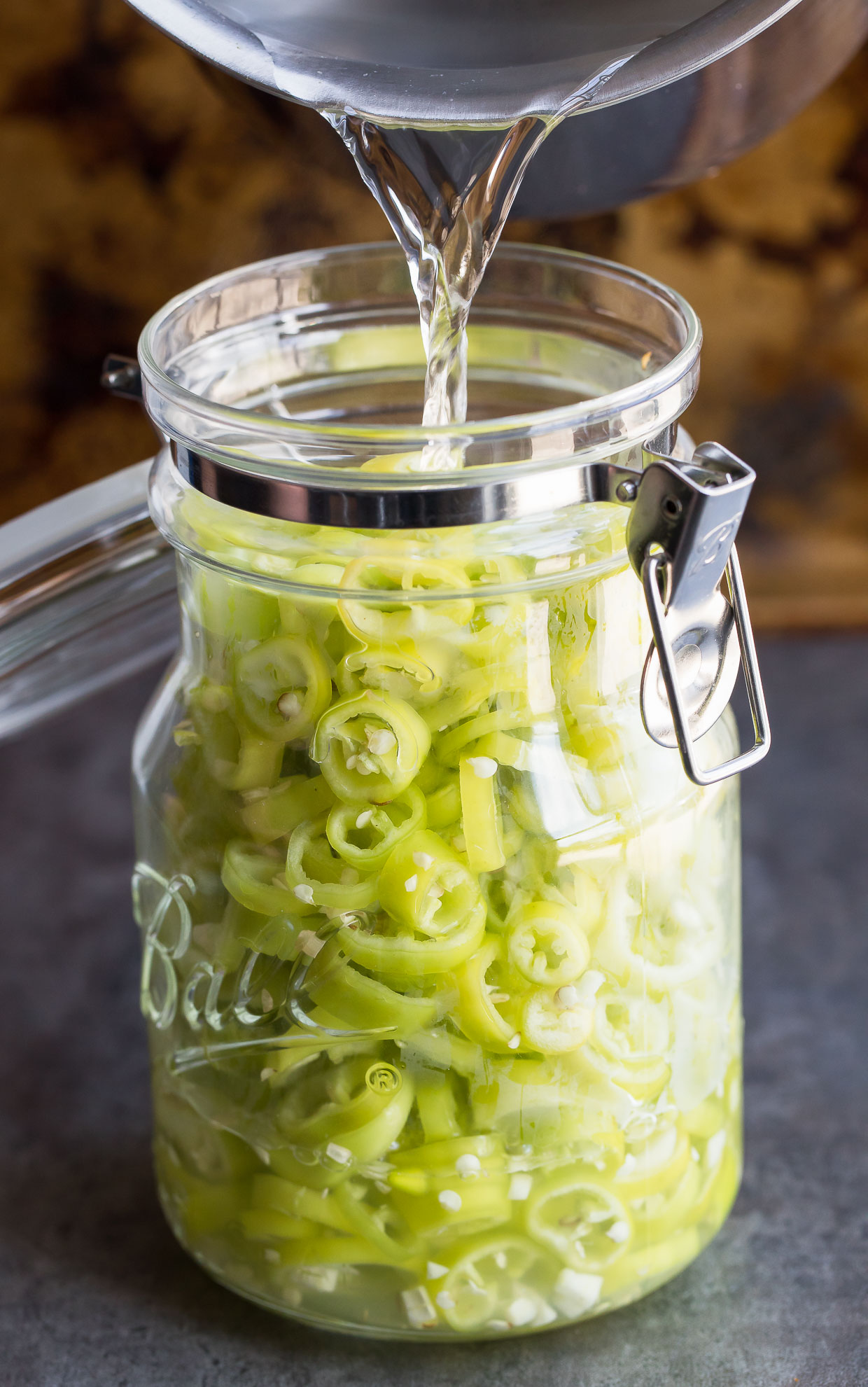
- Pour the hot brine over the peppers, making sure they’re fully covered.
Pour slowly so the peppers don’t float. If needed, press the rings down gently with a fork or spoon. Fill the jar to the top, but leave a little space so it won’t overflow.
- Let the jar cool at room temperature, then cover and refrigerate for at least 1 hour.
The longer they chill, the more flavor they absorb. After 1 hour, you’ll get a mild pickle. For stronger taste, leave them for 4–24 hours.
Try a few slices of jalapeño for extra heat, or add thin strips of bell pepper for color.
Why you’ll love it: Fast, crisp, and better than store-bought.
You control the ingredients—no preservatives or artificial colors. The peppers stay bright, crunchy, and tangy. They’re perfect for sandwiches, salads, or as a simple snack.
Many beginners don’t realize how much the thickness of your slices affects the texture. Thin rings pickle faster and absorb more brine, while thicker rings stay crunchier and take longer to flavor. Try both to see which you prefer.
Example Use:
Sweet & Spicy Pickled Banana Peppers
Add these classic pickled banana peppers to a turkey sandwich, sprinkle on top of a Greek salad, or use as a garnish for homemade pizza. If you make a batch for a party, guests will love the fresh, tangy taste.

Want a little kick with your crunch? This version mixes sweet and heat, perfect for topping tacos, pizza, or even grilled cheese. A touch of honey and chili flakes makes the flavor pop.
🍫 Ingredients:
- 6 banana peppers (about 2.5 cups sliced)
- 1 cup apple cider vinegar
- 1 cup water
- 3 tablespoons honey (or sugar)
- 2 teaspoons sea salt
- 1/2 teaspoon mustard seeds
- 1/2 teaspoon red chili flakes
- 1 small carrot (sliced into thin coins)
- 2 cloves garlic (smashed)
🥣 Steps:
- Wash and slice banana peppers into rings. Slice the carrot.
Remove seeds for a milder pickle, or leave some in for extra heat. Carrots add color, crunch, and sweetness.
- Layer peppers, carrot, and garlic in a clean pint or quart jar.
Arrange the vegetables so colors are mixed. Carrots at the bottom help keep peppers from floating. Press the veggies gently to fit more in the jar.
- In a saucepan, combine vinegar, water, honey, salt, mustard seeds, and chili flakes. Warm on medium until honey dissolves (about 3 minutes). Stir well.
Apple cider vinegar adds a fruity note, but you can use white vinegar for a sharper taste. Mustard seeds bring a mild spice and texture. Chili flakes add heat—adjust amount to your liking.
- Pour the hot brine over the vegetables until fully submerged.
If brine doesn’t cover the veggies, add a bit more water and vinegar (equal parts). Seal the jar right away to keep flavors strong.
- Cool to room temp, seal, and refrigerate at least 2 hours for best flavor.
After chilling, taste a pepper. If you want more sweetness or spice, add extra honey or chili flakes and let sit another hour.
Maple syrup gives a deeper, richer sweetness. You can also use agave nectar or brown sugar for different flavors.
Why you’ll love it: Sweet, tangy, and just the right amount of spice.
This recipe is perfect for anyone who likes a balance of flavors. The sweet and spicy brine works well with grilled meats, tacos, and even Asian stir-fries.
Don’t skip the carrot! It’s not just for looks—it absorbs the brine and adds a mild sweetness that balances the vinegar and chili. Many people throw away the carrots, but they make a great snack or salad topping.
Example Use:
Top a spicy chicken sandwich, add to nachos, or mix into a bowl of rice and beans. The sweet and spicy peppers brighten up any dish. Try chopping them fine and stirring into salsa for a quick flavor boost.
Mistakes To Avoid When Pickling Banana Peppers
Even simple recipes can go wrong. Watch out for these common mistakes:
- Don’t use old or soft peppers—fresh is key for crunch.
Fresh peppers keep their texture and color. If you use wilted or bruised peppers, your pickles will be mushy and dull. Buy peppers that are firm, bright, and shiny.
- Avoid skipping the sugar or sweetener, even in savory recipes—it balances acidity.
Sugar isn’t just for sweetness. It balances the vinegar and prevents pickles from tasting harsh. Even a small amount makes a big difference.
- Don’t pour boiling brine over the peppers, or they’ll lose crunch.
Very hot brine can cook the peppers, making them soft and limp. Always heat just enough to dissolve ingredients and pour while warm, not boiling.
- Don’t under-salt; your pickles will taste flat.
Salt is essential for flavor and preservation. If you use too little, the pickles will be bland and may spoil faster. Taste the brine before pouring—if it’s not salty enough, add a pinch more.
- Avoid plastic containers—glass jars are best for safe storage.
Plastic can absorb smells and colors, and may react with vinegar. Glass keeps pickles fresh, prevents contamination, and lets you see the bright colors.
- Don’t forget to fully submerge the peppers in brine, or some pieces won’t pickle evenly.
If peppers float above the brine, they won’t absorb flavor and may spoil. Press them down gently, or use a clean weight if needed.
Many beginners forget to wipe the jar rim before sealing. A clean rim helps the jar seal tightly and keeps pickles fresh longer. Always wipe with a damp cloth before closing.
Example Mistake:
If your pickles taste too sour or salty, you can rinse them quickly before serving. Or, let them sit in the fridge for another day—they often mellow over time.

Credit: www.pookspantry.com
Storing And Using Pickled Banana Peppers
These peppers are not just easy to make—they store well and stay tasty for weeks.
- Fridge Life: Up to 1 month when kept in a sealed glass jar.
Always use a clean fork or spoon to remove peppers. Dirty utensils introduce bacteria and shorten shelf life. If you see cloudy brine or soft peppers, it’s time to make a new batch.
- No Canning Needed: These are refrigerator pickles, not shelf-stable.
Don’t leave jars at room temperature. They’re meant for the fridge only. If you want to make shelf-stable pickles, you need proper canning and sterilization.
- Reheating: No need—serve cold or at room temperature for best texture.
Heating pickled peppers can make them mushy. Just take from the fridge and add to your meal. If you want a warm topping, add at the end of cooking.
- Creative Uses:
- Top sandwiches, wraps, and burgers for a zesty crunch.
Add a handful to a roast beef sandwich or veggie wrap. Their flavor cuts through rich meats and creamy sauces.
- Toss in salads for brightness.
Mix with greens, tomatoes, and cucumbers. Their tangy taste pairs well with vinaigrettes.
- Add to pizza before baking for a tangy twist.
Scatter on homemade or frozen pizza before baking. The peppers caramelize and add extra flavor.
- Mix into pasta salad or potato salad.
Chop finely and stir into cold salads for a burst of color and taste.
- Chop and stir into scrambled eggs or omelets.
Add to eggs just before serving for a mild heat and tang.
- Pair with cheese and crackers as a snack.
Their crunch and acidity balance rich cheeses.
Insider tip: The leftover brine makes a flavorful vinaigrette base—just add olive oil and whisk.
Try using the brine in marinades for chicken or pork, or drizzle over roasted vegetables for extra zing.
Don’t throw away the brine! It’s packed with flavor and can be used for pickling other veggies, like cucumbers, onions, or even hard-boiled eggs. Many people miss this easy way to reuse and get more taste from their pickling efforts.
Example Use:
Pour a little brine into your next salad dressing, or use it to deglaze a pan after cooking meat. It adds acidity and depth without needing fresh lemon juice or vinegar.
Quick Tips For Faster, Smarter Pickling
Save time and still get amazing results with these shortcuts and swaps:
- Use a mandoline slicer for fast, even pepper rings.
Mandoline slicers make uniform slices, so pickles absorb flavor evenly. Always use the hand guard to avoid cuts.
- Swap white vinegar for rice vinegar for a milder taste.
Rice vinegar is less acidic and gives a softer, sweeter flavor. Great for Asian-inspired pickles.
- Try jalapeño slices with banana peppers for extra heat.
Mix in spicy peppers for a custom blend. If you’re making a batch for guests, warn them about the heat!
- Use pre-minced garlic or garlic powder if you’re in a hurry.
Fresh garlic is best, but powder or pre-minced works when time is short. Adjust amount for stronger flavor.
- Don’t have mustard seeds? Use a pinch of ground mustard.
Ground mustard gives a similar flavor. You can also try coriander seeds, dill seeds, or cumin for variety.
- For zero sugar, use a sugar substitute like stevia—just adjust to taste.
Stevia and monk fruit work well. Start with a small amount—some substitutes are sweeter than sugar.
Many beginners use regular table salt, but kosher salt is better. It dissolves faster and doesn’t contain additives that can cloud the brine.
Example Use:
If you’re making pickles for a party, use colorful peppers like red or orange banana peppers. They make the jar look festive and taste just as good.
Frequently Asked Questions
How Long Do Pickled Banana Peppers Last In The Fridge?
Pickled banana peppers stay fresh in the refrigerator for up to 1 month if kept in a clean, airtight glass jar. Always use a clean fork to remove peppers to prevent spoilage.
If you see changes in color, smell, or texture, it’s best to throw them out and make a new batch.
Can I Use Other Types Of Peppers With These Recipes?
Yes, you can swap in jalapeños, serranos, or bell peppers. Adjust the slicing and spice level to your taste, but keep the same brine ratio for best results.
Mixing different peppers creates colorful, flavorful pickles. Try a blend for variety, but remember spicy peppers will make the whole jar hotter.
Are These Recipes Spicy?
The classic version is mild. The sweet & spicy recipe has a gentle heat, but you can add more red pepper flakes for extra kick or remove seeds for less spice.
If you want very mild pickles, use banana peppers only and remove all seeds. For spicy pickles, leave seeds in or add hot peppers.
Do I Need To Sterilize The Jars?
For refrigerator pickles, a thorough wash with hot, soapy water is enough. No need for full sterilization like in canning. Always use glass jars for best results.
If you plan to store pickles longer, sterilize jars by boiling for 5 minutes before filling.
Is Pickling Healthy?
Pickled banana peppers are low in calories and fat. They add flavor without extra oil or sugar (unless you choose the sweet version). For more on the health benefits of pickled foods, visit Wikipedia’s pickling page.
Banana peppers are high in vitamin C and potassium. Pickling keeps most nutrients, but does add sodium. Eat in moderation if you’re watching your salt intake.
Pickling is a great way to preserve extra vegetables from your garden or market. If you have too many peppers, make a few jars and enjoy them all month.
Try It, Pin It, And Share Your Ideas
Pickled banana peppers make everything brighter and tastier. These two recipes take almost no time, use basic ingredients, and fit any meal. Ready to try them? Pin your favorite recipe for later and let us know: What’s your favorite way to use pickled banana peppers? Your feedback inspires new ideas for every busy, flavor-loving home cook.
Don’t be afraid to experiment. Try adding herbs, spices, or even other vegetables to your pickles. Share your results with friends or online communities—they might give you new tips or flavor ideas. Each jar is a chance to make food more fun and delicious.
If you have kids, let them help with slicing and packing the jars. Pickling is a simple, hands-on kitchen project that teaches about flavors and food science. Plus, kids are more likely to eat vegetables they helped make!
Next time your meal feels boring or tasteless, remember: one jar of pickled banana peppers can make everything better. With these recipes, you’ll never have to settle for bland food again. Enjoy the crunch, tang, and color—and happy pickling!